
It was a chilly Saturday night, the kind where the wind rattles the windows and the house smells faintly of pine from the fireplace. I was rummaging through the pantry, trying to decide what to throw together for my teenage kids who were glued to the TV, and I spotted a bag of pepperoni that had been waiting for a perfect moment. The moment arrived when I remembered the old family recipe for Pepperoni Bread that my grandmother used to make for game nights, a recipe that turned a simple loaf into a crowd‑pleasing masterpiece. I could almost hear the crackle of the oven and feel the buttery aroma swirling around the kitchen as I began to mix the dough.
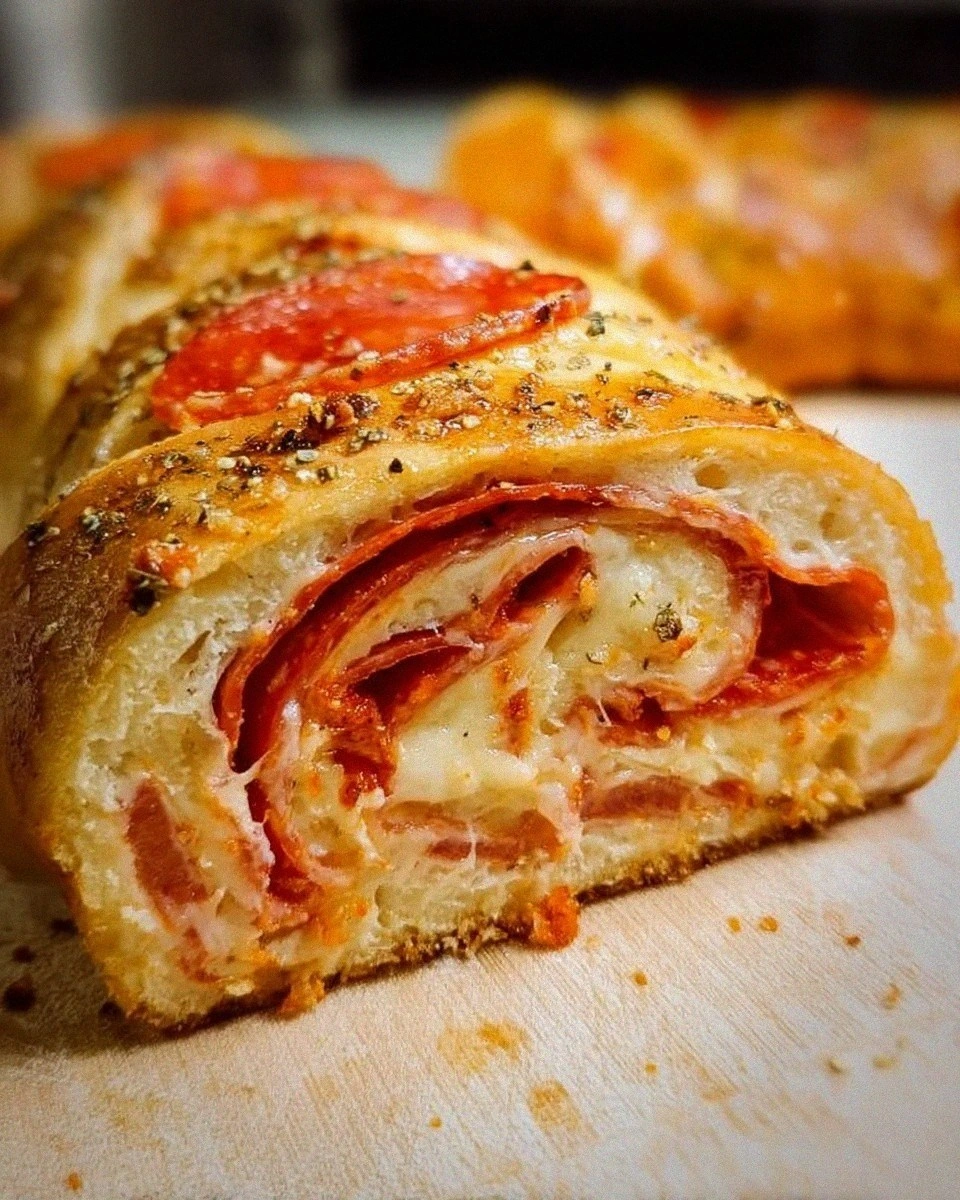
The first thing that hits you when you pull the loaf out of the oven is a golden‑brown crust that glistens with a thin sheen of melted cheese, and a cloud of fragrant steam that carries hints of garlic, oregano, and that unmistakable spicy pepperoni perfume. When you slice into it, the interior reveals a soft, pillowy crumb dotted with pockets of gooey mozzarella that stretch like a lazy cat waking from a nap. The pepperoni slices are perfectly crisp on the edges, offering a satisfying snap that contrasts beautifully with the tender bread. Imagine the sound of the crust cracking as you break a piece off and the way the cheese strings cling to your fingers – it’s pure comfort food with a punch.
What makes this recipe stand out isn’t just the flavor, but the way each component works together to create layers of texture and taste. The dough is enriched with butter and a touch of honey, giving it a subtle sweetness that balances the heat of the pepperoni. The herbs are toasted just enough to release their essential oils, adding depth without overwhelming the palate. And there’s a secret step I’ll reveal later that turns an ordinary loaf into something you’ll want to serve at every gathering. Trust me, once you try this, you’ll be the go‑to host for game nights, movie marathons, and spontaneous snack attacks.
Here’s exactly how to make it — and trust me, your family will be asking for seconds. But before we dive into the dough‑kneading, the cheese‑melting, and the pepperoni‑loving magic, let’s explore why this recipe works so well and how each ingredient contributes to the final masterpiece.
🌟 Why This Recipe Works
- Flavor Depth: The combination of cured pepperoni, aromatic herbs, and a buttery dough creates a multi‑dimensional taste that feels both familiar and exciting. Each bite delivers a burst of savory spice followed by a mellow, buttery backdrop.
- Texture Contrast: A crisp, golden crust meets a soft, airy interior, while the pepperoni offers a satisfying crunch. This contrast keeps your mouth engaged from the first bite to the last crumb.
- Ease of Preparation: Although it sounds impressive, the steps are straightforward and can be completed in under an hour, making it perfect for busy weeknights or weekend gatherings.
- Time Efficiency: The dough rises quickly, and the bake time is short, so you won’t be stuck waiting for the oven to work its magic. You’ll have a hot, fragrant loaf ready in just 45 minutes.
- Versatility: This bread can serve as a hearty appetizer, a side for soups and salads, or even a main dish when paired with a simple green. Its adaptability makes it a staple in any kitchen.
- Nutrition Balance: While indulgent, the recipe includes protein‑rich pepperoni and cheese, plus a modest amount of whole‑grain flour for fiber, giving you a satisfying snack without feeling overly heavy.
- Ingredient Quality: Using high‑quality pepperoni and fresh herbs elevates the dish from ordinary to restaurant‑grade, proving that simple ingredients can shine when treated with care.
- Crowd‑Pleasing Factor: The familiar flavors of pizza in a portable, hand‑held form make it a hit with both kids and adults, ensuring everyone leaves the table smiling.
🥗 Ingredients Breakdown
The Foundation: Dough Essentials
All great breads start with a solid foundation, and in this recipe the dough is the stage upon which all other flavors perform. We use bread flour for its high protein content, which creates gluten strands that give the loaf its chewy structure. If you prefer a slightly healthier twist, you can substitute half of the bread flour with whole‑wheat flour, adding a nutty undertone without compromising the rise. Warm water (around 110°F) activates the yeast, ensuring a lively fermentation that produces those airy pockets you love. A pinch of instant yeast works quickly, but if you have time, a slow rise with active dry yeast can develop deeper flavor.
Aromatics & Spices: The Flavor Builders
The aromatic trio of garlic, dried oregano, and crushed red pepper flakes is the secret behind the perfume that greets you when the bread emerges from the oven. Freshly minced garlic releases allicin, creating a sharp, inviting scent, while oregano adds an earthy, slightly sweet note that pairs perfectly with pepperoni. Red pepper flakes give a subtle heat that lifts the entire profile without overwhelming the palate. If you’re a fan of smoky flavors, a dash of smoked paprika can replace part of the red pepper flakes for a different dimension.
The Secret Weapons: Cheese & Pepperoni
Mozzarella cheese, shredded, is the melty glue that binds the pepperoni to the dough, creating those glorious stretch‑and‑pull moments. For extra richness, blend in a handful of shredded Parmesan, which adds a nutty depth and a slightly crispy crust when it melts. The pepperoni slices are the star of the show – look for a brand with a good balance of meat and spice, ideally one that isn’t overly greasy. If you’re adventurous, try a mix of spicy and sweet Italian cured meats, like a few slices of soppressata or capicola, to create a layered meaty experience.
Finishing Touches: Butter, Honey, and Herbs
A small amount of unsalted butter folded into the dough adds tenderness and a glossy finish to the crust. A drizzle of honey balances the savory heat of the pepperoni with a whisper of sweetness, enhancing the caramelization on the crust. Finally, a sprinkle of fresh parsley or basil after baking adds a pop of color and a fresh, herbaceous lift that brightens each bite. If you’re aiming for a more Italian‑authentic vibe, a pinch of grated Pecorino Romano can be added just before serving.
With your ingredients prepped and ready, let's get cooking. Here's where the fun really begins…

🍳 Step-by-Step Instructions
In a large mixing bowl, combine the warm water, honey, and instant yeast. Stir gently and let the mixture sit for about 5 minutes, or until it becomes frothy and bubbles appear on the surface. This is the moment where the yeast awakens, and you’ll see tiny white clouds forming – a sign that your bread will rise beautifully. Once frothy, add the bread flour, a pinch of salt, and the softened butter. Mix until a shaggy dough forms, then turn it out onto a lightly floured surface.
Knead the dough for roughly 8‑10 minutes, pressing, folding, and turning it until it becomes smooth, elastic, and slightly tacky. You’ll notice the dough becoming more supple, and if you press a finger into it, the indentation should slowly spring back. This gluten development is crucial for that airy crumb we’re after. If you have a stand mixer with a dough hook, set it to medium speed and let it do the work while you sip a cup of tea.
Place the kneaded dough in a lightly oiled bowl, cover it with a clean kitchen towel, and let it rise in a warm spot for about 45 minutes, or until it has doubled in size. You’ll hear a faint hissing as the dough expands, and the surface will look puffed and slightly domed. If your kitchen is cool, preheat your oven to 200°F and turn it off, then place the bowl inside – the gentle heat helps the dough rise evenly.
While the dough is rising, preheat your oven to 425°F (220°C) and line a baking sheet with parchment paper. In a small bowl, combine the minced garlic, dried oregano, crushed red pepper flakes, and a drizzle of olive oil to create a fragrant paste. This paste will be brushed onto the dough before adding the toppings, infusing every bite with aromatic depth.
Punch down the risen dough gently to release excess air, then turn it onto the prepared baking sheet and press it into a rectangular shape about 1‑inch thick. Using the back of a spoon, spread the garlic‑herb paste evenly across the surface, making sure to reach the edges. The scent of garlic will already be teasing your senses, promising a delicious crust.
Scatter the shredded mozzarella evenly over the dough, followed by the shredded Parmesan for extra golden crispness. Then arrange the pepperoni slices in a single layer, slightly overlapping for maximum coverage. For an added crunch, I like to lightly press the pepperoni into the cheese so it adheres well during baking. The colors – creamy white cheese, deep red pepperoni, and speckles of green herbs – create a visual feast even before the oven does its work.
Slide the baking sheet into the preheated oven and bake for 18‑22 minutes, or until the crust turns a deep golden brown and the cheese bubbles enthusiastically around the edges. You’ll hear a faint sizzle as the pepperoni releases its oils, and the kitchen will fill with that unmistakable aroma of pizza‑style comfort. Rotate the pan halfway through the bake for an even color, and keep an eye on the edges – they should be crisp but not burnt.
Remove the bread from the oven and let it rest on a wire rack for at least 10 minutes. This resting period allows the steam to settle, preventing the crust from becoming soggy and letting the flavors meld. While it cools, the cheese will firm up just enough to slice cleanly, and the interior will stay soft and airy. Finally, drizzle a little melted butter mixed with chopped fresh parsley over the top for a glossy finish and a fresh herb burst.
And there you have it! But before you dig in, let me share some tips that will take this from great to absolutely unforgettable…
🔐 Expert Tips for Perfect Results
The Taste Test Trick
Before you commit to the final bake, lightly press a small corner of the dough with your fingertip. If it springs back slowly, the gluten is developed just right. I once baked a loaf that felt too firm because I skipped this quick test, and the result was a dense, chewy texture that didn’t have that light, airy feel I love.
Why Resting Time Matters More Than You Think
Allowing the dough to rest after shaping lets the gluten relax and the surface tension even out. This short pause—about 10 minutes—prevents the bread from shrinking in the oven and helps the crust stay tender. I learned this the hard way when I rushed the step and ended up with a loaf that curled up like a tiny bread bowl.
The Seasoning Secret Pros Won’t Tell You
A dash of smoked paprika mixed into the garlic‑herb paste adds a subtle smoky undertone that mimics a wood‑fired pizza oven. It’s a secret I picked up from a pizzeria chef who swore by it for that “just‑right” depth. Try it once, and you’ll wonder why you ever used plain oregano alone.
The Magic of a Hot Oven
Starting the bake at a high temperature (425°F) creates an instant “oven spring,” giving the loaf its lift and a crisp crust. If you lower the temperature, you’ll get a softer crust but lose that dramatic rise. Trust the heat; it’s the catalyst for that dramatic puff you love.
How to Keep the Pepperoni From Getting Too Greasy
Briefly sear the pepperoni slices in a hot, dry skillet for 30 seconds per side before placing them on the dough. This renders some of the excess fat, preventing the bread from becoming soggy while still preserving the spicy flavor. I tried skipping this step once, and the bottom of the loaf turned a little soggy – not ideal for a crisp bite.
Serving with a Simple Dip
A quick dip of olive oil, balsamic glaze, and a sprinkle of grated Parmesan elevates each slice to a gourmet level. The acidity of the balsamic cuts through the richness of the cheese and pepperoni, creating a balanced bite. My guests always ask for the dip recipe, so keep it handy!
🌈 Delicious Variations to Try
One of my favorite things about this recipe is how versatile it is. Here are some twists I've tried and loved:
Cheesy Jalapeño Kick
Swap half of the mozzarella for a pepper jack cheese and toss in thinly sliced jalapeños. The result is a spicy, melty variation that adds a fresh heat punch, perfect for those who love a little extra zing.
Mediterranean Olive & Sun‑Dried Tomato
Replace the pepperoni with a mixture of sliced Kalamata olives and chopped sun‑dried tomatoes. This creates a briny, slightly sweet profile that pairs wonderfully with fresh basil and feta crumbles added after baking.
Breakfast Breakfast
Add scrambled eggs and crumbled breakfast sausage to the topping, then finish with a drizzle of maple syrup for a sweet‑savory breakfast loaf. It’s a hearty start to the day that feels like a brunch buffet in a single slice.
Garlic‑Butter Herb Infusion
Mix softened butter with minced garlic, rosemary, and thyme, then spread it under the cheese layer before adding pepperoni. This creates an aromatic, herb‑laden crust that’s reminiscent of garlic knots, making each bite a fragrant delight.
Vegan Friendly
Use a plant‑based pepperoni alternative and dairy‑free mozzarella, and replace the butter with olive oil. The texture and flavor remain satisfying, proving that you don’t need animal products to enjoy a comforting, cheesy bread.
📦 Storage & Reheating Tips
Refrigerator Storage
Allow the bread to cool completely, then wrap it tightly in foil or place it in an airtight container. Stored in the refrigerator, it stays fresh for up to 4 days. To keep the crust from getting soggy, add a paper towel inside the wrap to absorb excess moisture.
Freezing Instructions
Slice the loaf into individual portions, wrap each slice in plastic wrap, and then place them in a freezer‑safe zip‑top bag. The bread freezes beautifully for up to 2 months. When you’re ready to enjoy, simply pop a slice into the toaster or oven – no thawing needed.
Reheating Methods
For the best texture, reheat in a preheated 350°F oven for about 8‑10 minutes, or until the cheese is melty again and the crust regains its crispness. If you’re in a hurry, a quick 30‑second blast in the microwave works, but add a splash of water on a paper towel to prevent the bread from drying out.


